Medical Scribe vs Virtual Assistant: What’s the Difference?

Doctors, Clinics, and Specialists: Should You Hire a Virtual Medical Assistant or a Medical Scribe?

If you’re running a clinic, managing home care visits, or handling a busy specialist practice, you already know the biggest pain point:

You don’t have time.

Time to chart.
Time to follow up.
Time to manage appointments.
Time to grow your practice.

So what’s the solution?

You’ve probably heard of Virtual Medical Assistants (VMAs) and Medical Scribes. Both sound helpful — but which one is right for you?

Let’s break it down, with zero jargon, from the perspective of a busy healthcare provider like you.


If You’re Tired of Typing Notes After Hours — You Need a Medical Scribe

Be honest — are you spending your evenings clicking through EHR screens instead of relaxing with your family?

A Medical Scribe is your answer.

They listen in real-time during your patient consultations and document everything directly into your Electronic Health Record system.

That means:

  • No more charting at 9 PM.
  • No more missed notes.
  • No more burnout.

Whether in-person or virtually, scribes help you stay focused on what matters most: your patients.

Check out: Virtual Medical Scribe Services


If Your Front Desk Is Drowning — You Need a Virtual Medical Assistant

Now, if your issue is more like:

  • Phones ringing nonstop
  • Patients missing appointments
  • Delayed insurance verifications
  • Staff getting overwhelmed with scheduling and follow-ups

…then a Virtual Medical Assistant is what you need.

They act like an extension of your team — remotely handling everything from:

  • Appointment scheduling
  • Incoming patient calls
  • Insurance verification
  • Medical billing support
  • Daily admin chaos

And yes, they’re HIPAA-compliant and trained in medical workflows.

Learn more: Medical Virtual Assistant Services


But Wait — What If You Need Both?

You’re not alone.

Many practices are now choosing a hybrid approach:

  • A virtual scribe for clinical note-taking
  • A VMA to handle the office side of things

It’s the best of both worlds — especially if you’re managing a growing caseload, doing telehealth, or scaling up your services.

You gain time, peace of mind, and control over your schedule.


Here’s How to Choose: Quick Questions to Ask Yourself

Are you spending too much time charting and typing during visits?
→ Go with a Virtual Medical Scribe

Are you overwhelmed with admin tasks, calls, and follow-ups?
→ You need a Virtual Medical Assistant

Are both problems draining your time and energy?
→ Invest in both and let your practice finally breathe


What Makes PROVMA Different?

At PROVMA, we understand the day-to-day struggles you face. Our team is made up of real people — trained in the medical field — who can immediately plug into your workflow and start making your life easier.

  • HIPAA-compliant virtual staff
  • Customized support packages
  • Specialized in clinics, home care, and specialists

You don’t need to hire more in-house staff. You just need the right virtual support.


Ready to Offload the Work?

Don’t wait until your inbox is overflowing and your weekends are buried under documentation.

👉 Schedule a FREE consultation
👉 Explore Virtual Medical Scribe Services
👉 See How Our Virtual Assistants Work

Let us handle the busywork. You handle the care.


Final Thought: You Deserve Time Back

Whether you’re a solo provider, managing a multi-provider clinic, or delivering care at home — you didn’t go into healthcare to drown in admin.

Let a Virtual Medical Assistant or Medical Scribe give you back your time.

  • Your patients will notice.
  • Your family will appreciate it.
  • And you’ll finally feel in control of your practice again.
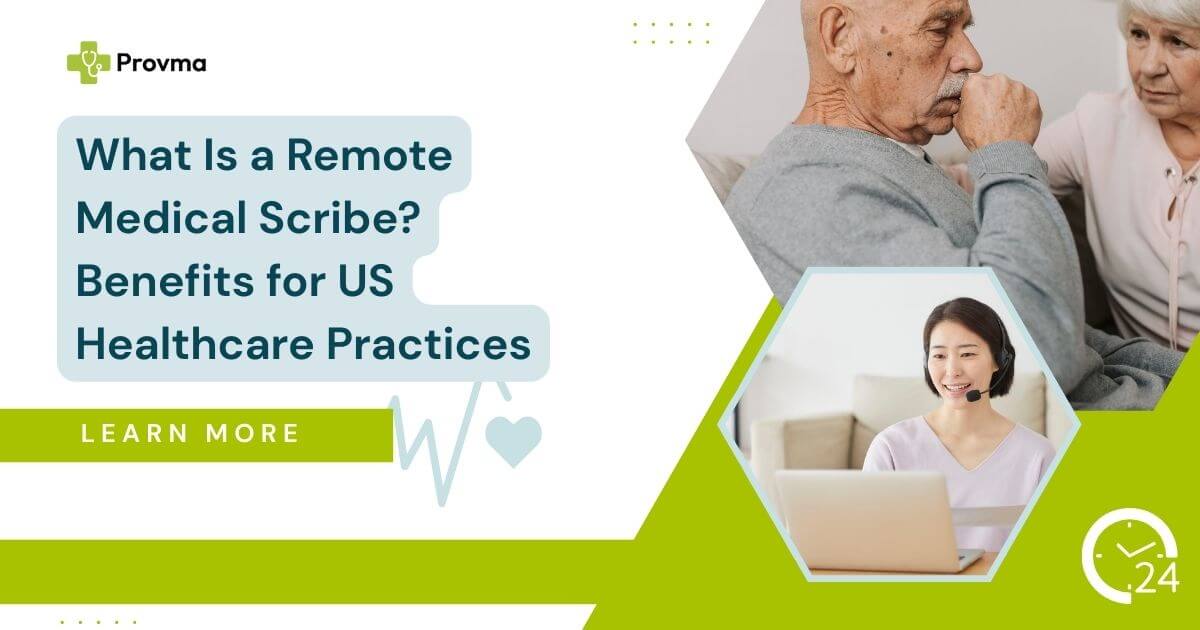
What Is a Remote Medical Scribe? Benefits for US Healthcare Practices

What Is a Remote Medical Scribe? Benefits for US Healthcare Practices

Healthcare documentation is critical—but it shouldn’t come at the cost of patient care. In today’s high-pressure clinical environment, physicians are spending hours each day on EHRs instead of engaging with patients. This is where a remote medical scribe becomes a game-changing solution.

In this guide, you’ll learn what a remote medical scribe is, how they work, their benefits, and why US healthcare practices are rapidly adopting them to improve efficiency and reduce clinician burnout.


What Is a Remote Medical Scribe?

A remote medical scribe is a trained healthcare documentation professional who records patient encounters in real time from a secure, off-site location. Using HIPAA-compliant audio/video tools and Electronic Health Record (EHR) systems, they document clinical notes while the provider focuses fully on the patient.

Unlike traditional in-office scribes, remote scribes work virtually—eliminating the need for physical workspace while maintaining the same level of accuracy, compliance, and clinical understanding.

In simple terms:
A remote medical scribe performs the same duties as an on-site scribe—without being physically present.


How Remote Medical Scribes Work in Clinical Settings

Remote medical scribes integrate smoothly into existing workflows without disrupting patient visits. After onboarding and EHR training, they become an extension of your clinical team.

Real-Time Clinical Documentation

During patient encounters—whether in-person or via telehealth—the scribe listens securely and documents notes directly into the EHR.

Detailed and Accurate Records

They capture patient histories, chief complaints, assessments, diagnoses, and treatment plans with precision.

HIPAA-Compliant Processes

All documentation follows strict US healthcare regulations, including HIPAA, billing standards, and audit requirements.

Support for Multiple Care Models

Remote scribes can assist with:

  • In-clinic visits
  • Telemedicine appointments
  • Hybrid care models
  • Home healthcare documentation

This flexibility makes them ideal for modern healthcare delivery.


Key Benefits of Using a Remote Medical Scribe

Remote medical scribes aren’t just a convenience—they’re a strategic investment in better care delivery.

1. More Time for Patient Care

Physicians spend less time typing and more time listening, diagnosing, and treating—leading to better patient experiences and reduced burnout.

2. Improved Workflow Efficiency

With documentation handled in real time, providers can see more patients without sacrificing quality or accuracy.

3. Lower Operational Costs

Remote scribes reduce overhead expenses associated with in-office staffing, equipment, and space.

4. Higher Documentation Accuracy

Trained scribes ensure complete and compliant records, improving billing accuracy and continuity of care.

5. Ideal for Telehealth Growth

As virtual care expands across the US, remote scribes provide seamless documentation support regardless of location.


Remote Medical Scribes vs AI Medical Documentation Tools

AI transcription tools—such as Sunoh.ai—are increasingly used to automate parts of medical documentation. While these tools offer speed and scalability, they still lack full clinical judgment.

Key difference:

  • AI tools transcribe and summarize
  • Remote medical scribes understand clinical context, specialty terminology, and patient nuance

Many practices combine AI tools with human scribes for maximum efficiency. However, for complex cases, specialty care, and compliance-critical documentation, human expertise remains essential.


Who Should Use Remote Medical Scribe Services?

Remote medical scribes are ideal for a wide range of healthcare professionals, including:

  • Physicians & Doctors – Focus on diagnosis and treatment
  • Clinics & Medical Practices – Improve patient flow and reduce admin workload
  • Homecare Providers – Maintain accurate documentation remotely
  • Specialists – Cardiology, dermatology, orthopedics, psychiatry, and more

No matter the specialty, remote scribes adapt to your clinical workflow.


Seamless Integration With Your Practice

Adding a remote medical scribe doesn’t require major system changes. With proper onboarding, they integrate directly into your EHR and daily operations.

If you’re looking for a reliable, HIPAA-compliant solution, explore professional virtual medical scribe services tailored for US healthcare providers:


Final Thoughts: Are Remote Medical Scribes Worth It?

Remote medical scribes are transforming healthcare documentation by removing administrative burden from clinicians. They improve efficiency, support telehealth growth, and allow providers to reconnect with what matters most—patient care.

For US doctors, clinics, and homecare providers seeking sustainable growth and reduced burnout, remote medical scribes are no longer optional—they’re essential.

Why Care Homes Need a Virtual Medical Receptionist

Overworked Staff? Why Care Homes Need a Virtual Medical Receptionist

Improving Patient Satisfaction, Efficiency, and Care Quality

Care homes today operate in a highly demanding healthcare environment. Between managing resident care, responding to family concerns, coordinating with doctors and pharmacies, and handling constant phone calls, administrative pressure continues to grow. Staffing shortages and rising operational costs only add to the challenge.

This is where a virtual medical receptionist becomes more than a support function—it becomes a strategic solution that enhances communication, improves efficiency, and allows care teams to focus on what truly matters: resident well-being.


What Is a Virtual Medical Receptionist?

A virtual medical receptionist is a trained healthcare professional who handles front-desk and administrative tasks remotely. Using secure, HIPAA-compliant systems, they manage incoming calls, appointment scheduling, patient inquiries, follow-ups, and basic coordination with external providers.

Unlike general call center agents, medical virtual receptionists are trained in:

  • Medical terminology
  • Patient-centric communication
  • Privacy and HIPAA compliance
  • Healthcare workflows

Whether supporting your care home full-time or during peak hours, they act as the first point of contact, ensuring every interaction reflects professionalism, empathy, and trust.


1. 24/7 Call Handling for Families, Providers, and Residents

Care homes receive calls beyond regular business hours—from concerned family members, physicians, labs, pharmacies, and emergency contacts. Missed calls can lead to frustration, delayed care, or loss of trust.

A virtual medical receptionist ensures:

  • Calls are answered promptly, day or night
  • Urgent concerns are escalated correctly
  • Families feel reassured and informed

In senior care, consistent and timely communication is not optional—it’s essential for safety and peace of mind.


2. Reduce Administrative Burden on Care Staff

Caregivers and clinical teams are often pulled away from residents to answer phones or manage schedules. This constant multitasking can lead to burnout, errors, and reduced care quality.

By offloading administrative tasks to a virtual medical receptionist, your care home can:

  • Allow nurses and caregivers to focus on residents
  • Reduce staff stress and burnout
  • Improve workflow efficiency

This separation of care and administration creates a healthier, more productive work environment.


3. Lower Operational Costs Without Compromising Service

Hiring in-house reception staff involves salaries, benefits, training, workspace, and turnover costs. For many care homes, this is no longer sustainable.

A virtual medical receptionist offers:

  • Predictable monthly costs
  • No recruitment or training expenses
  • Flexible scaling based on call volume

You receive professional front-desk coverage without the financial burden of full-time in-house staffing.


4. Smarter Scheduling, Reminders, and Follow-Ups

Virtual medical receptionists do more than answer phones. They actively support care coordination by:

  • Scheduling appointments and assessments
  • Sending reminders to families and residents
  • Managing follow-ups and call-backs

When integrated with your existing EMR or EHR systems, they help maintain accurate records and reduce missed appointments—improving both efficiency and continuity of care.


5. Higher Resident and Family Satisfaction

In competitive senior care markets, communication quality plays a major role in reputation and retention. Families expect fast, courteous, and knowledgeable responses.

Virtual medical receptionists are trained to:

  • Communicate with empathy and clarity
  • Provide accurate information consistently
  • Represent your care home professionally

Better communication leads to stronger trust, higher satisfaction, and improved long-term relationships with families.


6. HIPAA-Compliant and Secure Patient Communication

Handling sensitive health information requires strict compliance with privacy regulations. Reputable providers like Provma follow robust HIPAA-compliant processes to protect resident data at every step.

This includes:

  • Secure call handling systems
  • Encrypted communication channels
  • Strict access controls and protocols

Compliance not only reduces legal risk but also strengthens your care home’s credibility.


Why Choose Provma for Virtual Medical Receptionist Services?

Provma provides specialized virtual medical receptionist services for care homes and healthcare providers across the US. Our professionals are trained to seamlessly integrate with your operations while maintaining the highest standards of care, privacy, and professionalism.


Conclusion: A Smarter Way to Support Modern Care Homes

Care homes need solutions that balance compassionate care with operational efficiency. A virtual medical receptionist helps achieve both by reducing administrative strain, improving communication, lowering costs, and enhancing resident and family satisfaction.

If your care home is facing staffing challenges, growing call volumes, or rising costs, a virtual medical receptionist is not just an upgrade—it’s a smart, future-ready investment.

Medical Assistant vs Clinical Assistant: Duties, Salaries, Training & Career Paths

Medical Assistant vs Clinical Assistant: Duties, Salaries, Training & Career Paths

The healthcare sector employs a variety of support staff, but medical assistants and clinical assistants often cause confusion because their job titles sound similar. The difference lies in scope, training, and primary responsibilities:

  • Medical Assistants handle a blend of administrative (scheduling, billing, patient records) and clinical (vital signs, assisting in exams) work.
  • Clinical Assistants concentrate almost entirely on patient-facing tasks, such as preparing rooms, recording vitals, assisting in minor procedures, and ensuring patient comfort.

While both roles are vital to a clinic or hospital’s daily operations, choosing between them depends on whether you want a dual-role position or a purely clinical focus.

If you manage a healthcare practice and want to offload these tasks, Provma’s Virtual Medical Assistants can perform administrative and certain clinical-support functions remotely, reducing costs while maintaining quality patient care.


1. Role & Responsibilities

Medical Assistant (MA)

Primary Focus: Combines patient care with administrative duties.

Typical Tasks:

  • Scheduling appointments and managing patient flow.
  • Updating electronic health records (EHR).
  • Taking patient histories and vitals.
  • Assisting physicians during examinations.
  • Handling billing, insurance claims, and coding.

Where They Work: Outpatient clinics, private practices, and hospitals.


Clinical Assistant (CA)

Primary Focus: Direct patient care under physician or nurse supervision.

Typical Tasks:

  • Preparing exam rooms and sterilizing instruments.
  • Taking and recording vital signs.
  • Assisting in minor surgical procedures.
  • Explaining treatment processes to patients.
  • Monitoring patient comfort and safety.

Where They Work: Specialty clinics, dental practices, and hospital departments.


2. Training & Certification

Medical Assistants

  • Typically complete a Medical Assistant Program (4–12 months).
  • Certifications: CMA (Certified Medical Assistant), RMA (Registered Medical Assistant).
  • Training includes administrative systems, clinical procedures, and basic pharmacology.

Clinical Assistants

  • May not require formal certification in all states but benefit from healthcare-related diplomas.
  • Training focuses heavily on clinical protocols, infection control, and patient interaction.
  • Additional certifications can include CPR, First Aid, and role-specific skills.

3. Salary Comparison

Medical Assistant vs Clinical Assistant Salary

  • Medical Assistants: $38,000–$42,000 annually (U.S. average).
  • Clinical Assistants: $36,000–$40,000 annually.

Clinical Medical Assistant vs Medical Assistant Salary

A Clinical Medical Assistant — who performs both clinical and some administrative duties — can earn between $39,000–$44,000.


Clinical and Administrative Medical Assistant Salary

Professionals skilled in both clinical procedures and administrative workflows often earn $45,000+, especially in high-demand urban areas or specialized facilities.


Earning Potential Factors

  • Location: Salaries are higher in metro areas.
  • Experience: More years = higher pay.
  • Certification: Certified roles command higher wages.
  • Work Setting: Specialty clinics and hospitals often pay more than general practices.

4. Career Progression

Medical Assistant Pathways

  • Specialized Medical Assisting (pediatrics, cardiology, dermatology).
  • Supervisory roles in administrative or clinical departments.
  • Transition to nursing programs or healthcare management roles.

Clinical Assistant Pathways

  • Specializing in specific medical departments (orthopedics, surgery assistance).
  • Transition to Clinical Medical Assistant roles for higher pay.
  • Further training to become a licensed practical nurse (LPN) or registered nurse (RN).

5. Job Outlook

The U.S. Bureau of Labor Statistics projects 16% job growth for medical assistants between 2021–2031 — much faster than average. Clinical assistants, while not tracked as a separate category, are included in growth projections for healthcare support roles.

Demand is driven by:


6. Remote & Virtual Roles

Today, many healthcare practices outsource administrative and some clinical-support duties to remote professionals.
Provma.com offers:

  • Virtual Medical Administrative Assistants for scheduling, billing, and patient communication.
  • HIPAA-compliant Virtual Assistants trained for healthcare data security.
  • Cost-effective support without compromising care quality.

7. Choosing the Right Career

When deciding between becoming a medical assistant or a clinical assistant, consider:

Training Commitment: Are you ready for certification programs or short-term training?

Preferred Work Style: Do you enjoy multitasking between office and patient care, or do you prefer hands-on clinical work?

Career Goals: Are you looking to advance into nursing or management?

FAQs

Is a clinical assistant the same as a clinic assistant?

In many contexts, “clinic assistant” is simply another term for “clinical assistant,” but some regions may use it for administrative-only roles.

Which pays more — medical assistant or clinical assistant?

Generally, certified medical assistants earn slightly more, especially if they handle both clinical and administrative work.

Can a clinical assistant become a medical assistant?

Yes, by gaining administrative training and certification, a clinical assistant can transition to a medical assistant role.

What certification is needed for a clinical medical assistant?

Most employers prefer certifications like CCMA (Certified Clinical Medical Assistant) or CMA with a clinical focus.

Are there online medical assistant programs?

Yes. Many accredited programs allow students to complete theory online and clinical training in person.

Can these roles be done remotely?

Administrative portions can — through services like Provma’s Virtual Medical Assistant Services. Clinical tasks require in-person work.

For certification details, visit the American Association of Medical Assistants.

Medical Assistant Career Boom: How Virtual Services Support This Growth

Medical Assistant Career Boom: How Virtual Services Support This Growth

The healthcare industry is experiencing a major shift, with the demand for medical assistants skyrocketing. As more healthcare practices look for efficient, cost-effective solutions, virtual medical assistants (VMAs) are playing a crucial role in this expansion. The rise of telemedicine, the need for streamlined administrative processes, and the growing trend of outsourcing medical support services have all contributed to this boom. But how exactly do virtual services help support this growth? Let’s dive in.

The Surge in Demand for Medical Assistants

With an aging population, ongoing healthcare reforms, and an increasing need for healthcare accessibility, medical assistants are in high demand. According to the Bureau of Labor Statistics, the job outlook for medical assistants is expected to grow much faster than average, with a projected increase of 19% from 2019 to 2029. This surge in demand is driven by the growing number of healthcare facilities and the ever-expanding need for healthcare services.

As practices and hospitals expand their services, they require additional administrative support to keep operations running smoothly. This is where virtual medical assistants come in—offering a scalable, flexible solution that meets the demands of modern healthcare environments.

Virtual Medical Assistants: A Game-Changer for Healthcare

Virtual medical assistants are remote workers who provide a wide range of administrative services to healthcare professionals, from scheduling appointments to managing patient records. They support physicians, clinics, and hospitals by handling routine tasks, thereby allowing healthcare professionals to focus more on patient care. Here’s how these virtual services are enhancing the medical assistant career growth:

  1. Cost-Effective Solutions
    Hiring a virtual assistant reduces the costs associated with hiring in-house staff, such as office space, equipment, and training. This makes it easier for smaller practices to access skilled administrative support without the overhead costs of full-time employees.
  2. Streamlined Operations
    Virtual assistants can manage appointments, follow up on patient inquiries, handle medical billing, and maintain patient records—all remotely. This leads to more efficient operations and fewer missed appointments, ensuring that patients receive the care they need in a timely manner.
  3. Scalability and Flexibility
    Healthcare providers often experience fluctuating demand. Virtual assistants offer a scalable solution, allowing practices to adjust their administrative support based on current needs, without committing to permanent in-house staff. Whether it’s seasonal demand or an influx of new patients, virtual assistants can step in quickly and effectively.
  4. Improved Patient Experience
    By streamlining administrative tasks, virtual assistants free up time for healthcare professionals to interact more meaningfully with patients. This leads to enhanced patient satisfaction, as healthcare providers can focus on delivering quality care rather than being bogged down by administrative work.
  5. HIPAA-Compliant Services
    Virtual medical assistants are trained to work in compliance with healthcare regulations like HIPAA (Health Insurance Portability and Accountability Act). This ensures that sensitive patient information is handled securely, maintaining trust and confidentiality.

How Virtual Assistants Help Medical Practices Grow

The integration of virtual assistants into medical practices not only supports the efficiency of operations but also contributes to business growth. Here’s how:

  • Increased Capacity for New Patients: With administrative tasks handled remotely, practices can take on more patients, expand their services, and increase revenue.
  • Reduced Overhead Costs: By eliminating the need for on-site staff, practices save on operational costs and can invest those savings back into other areas of their business, such as improving patient care or expanding service offerings.
  • Focus on Core Services: Physicians can spend more time focusing on patient care and less on administrative responsibilities, ultimately improving their practice’s quality of service.

FAQs

What tasks can a virtual medical assistant handle?

A virtual medical assistant can manage tasks such as scheduling appointments, confirming insurance information, managing patient records, handling medical billing, and providing administrative support to doctors and healthcare teams.

How do virtual medical assistants comply with healthcare regulations?

Our Virtual assistants are trained to comply with HIPAA regulations and follow strict guidelines for handling patient data to ensure privacy and security.

Can virtual medical assistants improve patient satisfaction?

Yes, by reducing wait times for appointments, ensuring efficient communication, and providing timely follow-up, virtual assistants help enhance the overall patient experience.

Are virtual medical assistants suitable for small practices?

Absolutely. Virtual assistants are a cost-effective solution for small and medium-sized practices that want to offer high-quality administrative support without hiring additional in-house staff.

By incorporating virtual medical assistants into their operations, healthcare providers can not only keep up with the increasing demand for services but also optimize their resources and focus on what matters most—patient care. To explore how virtual assistants can elevate your practice, learn more about our Virtual Medical Assistant Services.

Provma.com
Privacy Overview

This website uses cookies so that we can provide you with the best user experience possible. Cookie information is stored in your browser and performs functions such as recognising you when you return to our website and helping our team to understand which sections of the website you find most interesting and useful.