A patient leaves your medical office with a good treatment plan. They know what exercises to do. They know what to watch for. They know when to come back to you as well. And then they go back home.
And after that, you know nothing about how it’s actually going for that patient.
Are they doing the exercises they were told to? Is the pain better or worse now? Are they noticing anything that might indicate that the plan needs to change? Are they really engaged with the recovery you both outlined together? Or have they done it maybe twice, found it very difficult, and then quietly stopped?
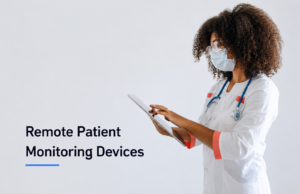
Remote therapeutic monitoring devices close this kind of gap well. They collect all data from your patients in between their visits and send it back to you. This means the clinical picture doesn’t really go completely dark the moment the patient’s appointment ends with you. Here’s what you need to know about these devices and what they mean for your medical practice.
The Patient You Only See Between Visits
This is the reality of most clinical care. You see your patient for maybe thirty or forty-five minutes. You do a very thorough job and build them a treatment plan that actually makes sense for their condition. And then the patient goes back to their daily life. And what happens there is almost invisible to you until they come back to you for their next appointment.
In 2025, over 71 million Americans used remote patient monitoring devices to manage their healthcare from their homes. This number shows a real shift in how patients and providers are thinking about all this space between visits. Remote monitoring use has been very much associated with reduced hospital readmissions, improved adherence to medication, and better communication between patients and clinicians.
So this appeal is very practical. A provider who can see how their patient is really responding to their treatment plan between appointments is a provider who can make much better decisions about that plan as well. Not at the next scheduled visit, when the issue has had weeks to develop or escalate. In real time, when any early intervention can completely change the trajectory.
Remote therapeutic monitoring devices are that specific category of tools that make this possible for all therapy-focused care. Therapy response. Functional status. Exercise adherence. Pain levels. All the data that tells you how the treatment is actually working.
What Are Remote Therapeutic Monitoring Devices?
Remote therapeutic monitoring is a specific type of remote care. It completely focuses on how your patients are doing with their therapy at home.
These devices track things that are not vital signs. Instead of checking things like blood pressure or heart rate, they look at things like:
- How often a patient does their exercises
- Whether their pain is getting better or worse
- How well the patient can move and function
- How the patient is responding to their treatment plan
Some of this information is collected automatically through wearable devices. Some is reported by the patient themselves through an app on their phone. For example, a device like the Masimo W1 medical watch tracks oxygen levels, pulse, and heart rate and sends all that data straight to their provider. Other RTM tools rely on patients checking in through an app to report their pain and function promptly.
Both of these methods give providers a much clearer picture of what’s happening between patient visits. Previously, that time period was so completely invisible to the clinical team.
Common Remote Therapeutic Monitoring Devices
Wikipedia notes that remote therapeutic monitoring uses digital tools to track full patient health outside the clinic. Cleveland Clinic, a trusted leader in healthcare innovation, has also used remote monitoring to improve care for patients with chronic conditions. Their work really shows how RTM fits into high-quality care models.
Common RTM devices include:
- Inhaler sensors – Track asthma and COPD medication use and technique
- Smart pill bottle caps – Monitor medication adherence
- Wearable movement trackers – Track activity and exercise for physical therapy
- Spirometers – Measure lung function at home
- Pain and symptom tracking apps – Allow patients to report pain and symptoms
- Fall detection devices – Alert caregivers if a patient falls.
How RTM Devices Work:
This whole system has three parts that work together. Each part is needed for the monitoring to be actually useful.
The device or app collects all the data. It could be a wearable that tracks any movement automatically. It could be a smartphone app that asks the patient to report their pain level, log their exercises, or answer any questions about their symptoms. The main thing is that it captures all information that really matters for the patient’s specific therapy and does it consistently enough to be helpful.
The data transmission sends all that information to a secure system where it can be easily reviewed. This happens automatically for device-collected data, so the patient doesn’t have to remember to send anything. For patient-reported data, the app prompts the patient and records their responses so the clinical team can see them as well.
The clinical review is where all this monitoring becomes real care. The provider or a team member reviews all the data on a regular schedule. They then look for any concerning signs or positive progress and respond accordingly.
For example, if a patient’s pain scores are not improving as expected by the third week, the provider can adjust their plan before week four. If a patient’s exercise data shows they have not done their exercises in maybe five days, someone on your team can do an outreach call quickly and not wait until the patient’s next appointment.
A physical therapist might use RTM for a patient recovering from knee surgery. The patient logs their daily exercises and rates their pain through an app. Then the therapist reviews this data each week through a completely secure portal. They notice the pain scores are higher on days after a specific exercise. They adjust the program here without needing any in-person visit. The patient stays completely on track. Also, their recovery goes much better.
The Benefits of RTM for Your Practice
There are many clinical and operational benefits of RTM. They are very specific and measurable.
RTM offers several specific benefits for medical practice:
- Better visibility. You can completely see what is happening between patient visits. This means you no longer have to guess if your patient is following their plan. Also, no more waiting for the next appointment to find out something went wrong.
- Earlier intervention. Any problems caught early are much easier to address. You can just adjust the plan before the patient’s condition gets worse. Before they end up back in your office with a bigger problem. One that could have been caught much earlier.
- Improved patient engagement. Patients who use RTM devices see their own data. They also see when their adherence is good. They see when their pain scores are going in the right direction. That kind of visibility creates a feedback loop that reinforces the good behaviors their treatment plan requires.
- Reimbursable services. Medicare and other insurers reimburse for RTM services. The Medicare Physician Fee Schedule provides reimbursement for device supply and treatment management. For medical practices that are already providing therapy-focused care, RTM creates a new billing pathway for services that were previously much more difficult to capture as reimbursable time.
RTM vs RPM: What’s the Difference?
These two types of remote monitoring are related and often talked about together. But they are not the same at all. Their difference matters for billing, for which providers can use them, and for which patients benefit the most.
Remote physiologic monitoring (RPM) tracks things like blood pressure, weight, blood sugar, and oxygen levels. This data has to be collected and sent automatically by an FDA-approved device. RPM is usually billed by doctors and certain other providers. It also requires the device to collect at least 16 days of data within around 30 days.
Remote therapeutic monitoring (RTM) tracks all things related to how a patient is responding to therapy. This includes exercise adherence, pain levels, functional status, and respiratory or muscle activity. RTM allows patients to report some of this data themselves through an app. This makes it more flexible. And importantly, RTM is also one of the few Medicare programs that physical therapists and occupational therapists can bill for on their own.
This difference is very important because RTM is available to more practices and providers than RPM. If your practice does physical therapy, occupational therapy, or any kind of therapy-focused rehab, RTM is the option that fits your patients and your billing best.
Billing and Reimbursement for RTM
The way RTM is billed has changed a lot since the American Medical Association created codes for it in 2022. New codes were added for 2026 that make it much easier for practices to use RTM. Especially for patients who don’t need a full month of monitoring.
The codes cover two main parts of RTM service. Device supply and setup covers the cost of giving the patient the monitoring device or app and teaching them how to use it well. Treatment management time covers the provider’s time spent reviewing all the data, making decisions based on it, and talking to their patient about what the data shows.
The new 2026 codes include shorter monitoring periods. Before, you needed 16 days of data in 30 days. Now there are options for monitoring periods of just 2 to 15 days. This is very helpful for practices whose patients only need short-term monitoring after surgery or a short course of treatment.
To bill for RTM services, you need:
- A signed order for the monitoring
- A device or app that collects and sends all the data
- Proof that you communicated with the patient
- Documentation of your clinical review
- The patient’s medicare card number to verify their coverage and process claims
A Practice That Stays Connected
Remote therapeutic monitoring devices completely change what it means to provide ongoing care. The appointment is not really the whole relationship. Recovery happens at home. Adherence happens at home. Pain, function, and daily progress all happen in the patient’s real life as well.
So, RTM brings that daily life into your clinical view. And this is not in a way that feels intrusive or that burdens your patients with constant data entry. Through helpful tools that fit into how your patients already live, collecting all the information that tells you if their treatment is working and alerting you when anything really needs attention.
Your patients feel much more connected to your care when they know their data is really reaching you. That someone is looking at it regularly. That if something is going wrong, it will be caught by them before their next appointment. That your practice doesn’t disappear between patient visits.
Provma provides dediacted virtual support for remote patient monitoring and remote therapeutic monitoring programs. This support covers scheduling, device setup coordination, patient education and onboarding, data review support, and strong communication with patients about their progress and questions.
Importantly, all this happens within a fully HIPAA-compliant system. Your patients get the full support they need between visits. Your clinical team gets all the data they need to make good decisions for the patients. And your medical practice delivers more connected care that leads to better outcomes and also stronger patient relationships.
Conclusion:
The patient who left your medical office this morning with a treatment plan is at home right now. You don’t really know how the exercises went. You don’t know how their pain is. You also don’t know if the plan is working well or if something has already started to go wrong.
Remote therapeutic monitoring devices mean you could know all this. That too, not until the next appointment. Now. In time to actually do something about it.
That’s the clinical value. That’s the patient relationship value. And with Medicare covering this service, it’s also quite good for your bottom line.
The gap between patient visits doesn’t have to be a blind spot. RTM closes it.
FAQs:
What are remote therapeutic monitoring devices?
Remote therapeutic monitoring devices are tools that track all patient health data outside the clinical setting. They collect information about therapy response, including exercise adherence, pain levels, functional status, and respiratory or musculoskeletal activity.
What’s the difference between RTM and RPM?
RTM tracks all non-physiologic data like exercise adherence and pain levels and allows patient self-reporting. RPM tracks physiologic data like blood pressure and glucose and requires data collection by an FDA-defined medical device.
Can physical therapists bill for RTM services?
Yes. RTM is one of the few Medicare remote-care programs that physical therapists and occupational therapists can bill in their own right.
Does Medicare cover remote therapeutic monitoring?
Yes. Medicare reimburses for RTM services, including device supply and treatment management. The newer 2026 codes allow billing for shorter monitoring periods of around 2 to 15 days.